

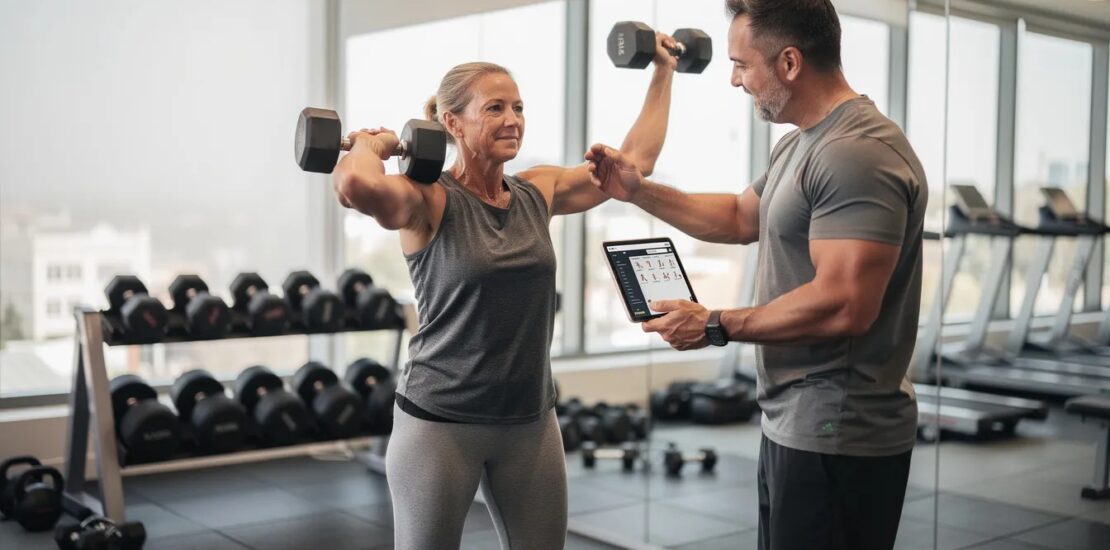
The demand for personalized fitness in Boca Raton has surged among adults in their 40s, 50s, and 60s who want to stay active for golf, pickleball, and travel. Not all trainers offer the same level of customization or safety. Choosing between an adaptive trainer and a general personal trainer, based on your age, health history, and goals, directly affects your joint health, physical function, and long-term quality of life.
At The Facility for Personal Training, every program is built on assessments, medical awareness, and the DVNS (Dynamic Variable Muscular Stimulation) system. This ensures training is precise, safe, and effective for real-world function, not generic fitness standards.
Clients benefit from:
- One-to-one, fully personalized training
- Programs adjusted for injuries, conditions, and mobility levels
- Trainers with degrees in Exercise Science, Physiology, or Kinesiology
- A focus on strength, balance, and long-term functional ability
If your goal is to stay active for golf, pickleball, travel, and daily life without setbacks, choosing the right training method matters from day one.
Call 561-997-8348 to schedule your assessment and begin a program built specifically for your body and goals.
👉Also Read: Living With Diabetes in Boca Raton, FL? Here Is Why Strength Training Should Be Part of Your Plan
What Is a General Personal Trainer?
A general personal trainer holds standard certifications and helps healthy clients improve fitness, lose weight, and build muscle, typically in commercial gym settings. Core responsibilities include designing workout plans, demonstrating exercises, and providing motivation.
Typical approach:
- Standardized templates (push/pull splits, full-body routines)
- Generic warmups and fitness assessments
- Focus on visible goals like fat loss and performance
This category works best for people in their 20s and 30s without significant injuries who are comfortable in busy fitness center environments.
What Is an Adaptive Trainer?
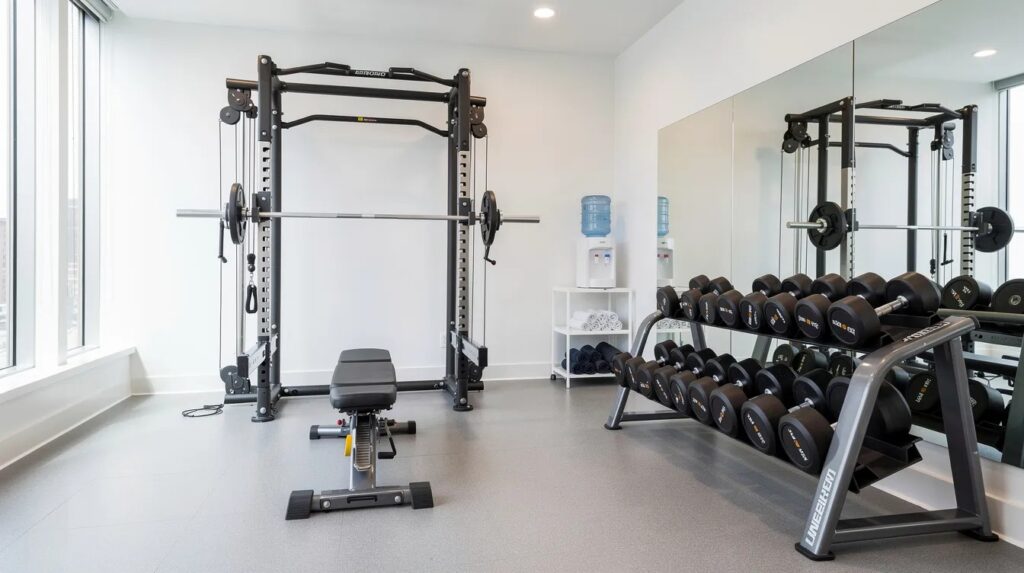
Adaptive personal training tailors every session to an individual’s physical limitations, medical history, and functional ability. An adaptive trainer modifies exercises, equipment, and intensity for issues like back pain, arthritis, balance deficits, and chronic conditions.
Required knowledge includes:
- Exercise science and biomechanics
- Age-related changes, such as muscle loss and joint degeneration
- Injury considerations, mobility restrictions, and coordination with healthcare providers
Key populations who benefit: Adults over 40, clients recovering from surgery, deconditioned individuals returning to exercise, and those referred by a physician or physical therapist. Adaptive training builds strength, mobility, and endurance within a framework that prioritizes safety and real-world function.
Key Differences: Adaptive Trainer vs. General Personal Trainer
| Factor | Adaptive Trainer | General Personal Trainer |
|---|---|---|
| Program Design | Highly individualized via assessments | Broad templates |
| Medical Integration | Central to training | Often limited |
| Focus | Functionality and longevity | Fitness and performance |
| Risk Management | High priority | Moderate priority |
| Client Demographic | Adults 40+, special populations | General population |
| Environment | Private studio | Crowded gyms |
Why Adaptive Training Is Growing in Boca Raton
Boca Raton consistently ranks among Florida’s most age-skewed communities, with a median age in the late 40s. Many residents want to preserve their abilities for golf, pickleball, boating, and travel. The prevalence of lifestyle-related conditions, prediabetes, joint degeneration, and balance issues makes standard bootcamp classes and generic programming an unnecessary risk for this population. Adaptive training blends strength, mobility, balance, and cardiovascular conditioning with medical awareness, matching the community’s shift toward longevity-focused wellness.
Are You a Good Candidate for an Adaptive Trainer?
Ask yourself:
- History of back, knee, shoulder, or hip surgery?
- Chronic joint pain during physical activity?
- Balance or stability concerns on uneven surfaces?
- Long breaks from exercise (6–12+ months)?
- Feeling intimidated or unsafe in crowded gym environments?
- A doctor or physical therapist recommending supervised exercise?
If you are 40 or older and identify with two or more of the above, an adaptive trainer is typically the safer and more effective match.
👉Also Read: Want Better Weight Training Results? Avoid These Mistakes (Boca Raton Trainer Approved)
Why Is Science-Based Programming Essential for Adults With Injuries or Medical Conditions?
For adults managing injuries or medical conditions, evidence-based programming is not optional; it is the standard of care. Look for trainers who hold degrees in Exercise Science, Physiology, or Kinesiology, not just certifications alone.
Science-based training begins with assessment: posture analysis, movement screening, and strength and balance testing. From there, a truly individualized plan is built, one that evolves with your progress rather than cycling through setbacks. Individualized, assessment-driven programming consistently reduces injury risk and produces more durable results than generic training approaches.
How Adaptive Training Supports Functional Living
For adults over 40 in Boca Raton, the true goal is functional independence, the ability to live actively on your own terms. Adaptive training directly targets:
- Walking farther without pain
- Climbing stairs comfortably
- Getting in and out of cars without discomfort
- Lifting groceries and luggage safely
- Maintaining good posture through daily activity
These functional gains translate directly to the activities that matter most: core rotation for golf, lateral agility for pickleball, and cardiovascular stamina for travel. Building this foundation now keeps adults active well into their 60s and 70s.
Common Misconceptions About Adaptive Programs and Training
“It’s only for injuries or disabilities.”
Adaptive training benefits anyone who wants joint-friendly, individualized support, particularly adults over 40 who want to train smart for the long term.
“It’s easier or less intense.”
Sessions are calibrated to your current capacity. They can be highly challenging, within a controlled, safe structure that reduces the risk of setbacks.
“Any general trainer can do the same thing.”
True adaptive training requires advanced education in exercise science, hands-on experience with special populations, and active collaboration with healthcare providers. It is a distinct skill set, not a minor variation on general training.
How to Choose the Right Personal Trainer in Boca Raton
During any initial consultation, ask:
- What is your educational background, and which certifications do you hold?
- Do you have experience working with clients over 40 or with my specific condition?
- How do you handle medical considerations, and do you communicate with healthcare providers?
- Is programming individualized based on assessment, or primarily template-based?
- Are sessions strictly one-on-one, or shared with other clients?
Also, evaluate the training environment itself: a private, quiet studio allows for close monitoring of form, breathing, and balance, all of which matter more as we age. One-on-one attention with a certified personal trainer enables real-time modifications that group settings simply cannot provide.
Which Trainer Is Right for You?
A general personal trainer in Boca Raton is a sound choice for healthy, injury-free individuals pursuing aesthetic or performance goals. An adaptive trainer is the right choice for adults 40 and older, anyone managing injuries, surgical history, chronic pain, or medical conditions, and anyone who deserves a private, clinically informed approach to fitness.
Reflect on your age, health history, and what you actually want your body to be able to do five or ten years from now. Investing in the right trainer today means fewer setbacks, better movement, and a higher quality of life over the long run.
👉Also Read: What Should Boca Raton, FL, Seniors Ask Personal Trainers About Training with Health Issues?
Find the Right Training Approach at The Facility for Personal Training in Boca Raton, FL
At The Facility for Personal Training, we specialize in adults 40 and older and integrate medical considerations into every program through our science-based DVNS system, a structured framework that addresses strength, mobility, balance, and cardiovascular health while protecting joints at every stage of training. Our trainers hold Exercise Science degrees and advanced certifications, and they work exclusively in one-on-one and semi-private settings that eliminate the noise and distraction of commercial gyms.
Schedule an initial consultation and movement assessment to build your personalized plan.
Frequently Asked Questions
How is adaptive training different from physical therapy?
Physical therapy evaluates and treats injuries or movement dysfunction, typically following a physician’s diagnosis, and is usually short-term and insurance-driven. Adaptive training picks up where rehab leaves off, building long-term strength, mobility, and function while respecting existing medical limitations. A qualified adaptive trainer communicates with your physical therapist and physician but does not replace medical treatment.
How quickly will I notice results with an adaptive trainer?
Many adults notice reduced joint stiffness and improved movement confidence within three to four weeks. Measurable gains in strength and balance typically emerge within eight to twelve weeks of consistent training. Simple markers, such as how your knees feel on stairs, how easily you get up from the floor, are often the clearest early indicators of progress.
Can I do adaptive training if I have multiple medical conditions?
Yes. Adaptive training is specifically designed for overlapping conditions like arthritis, high blood pressure, and previous surgeries. A thorough intake process and ongoing communication with your healthcare providers guide safe exercise selection. Adaptive fitness classes begin conservatively and progress as your body adapts, and your confidence builds.
Do I need to be “in shape” before starting with an adaptive trainer?
No prior fitness level is required. Your trainer will meet you where you are, beginning with low-impact movements and building progressively from there. Starting with professional guidance is precisely how you avoid the injuries that come from jumping back in alone.