

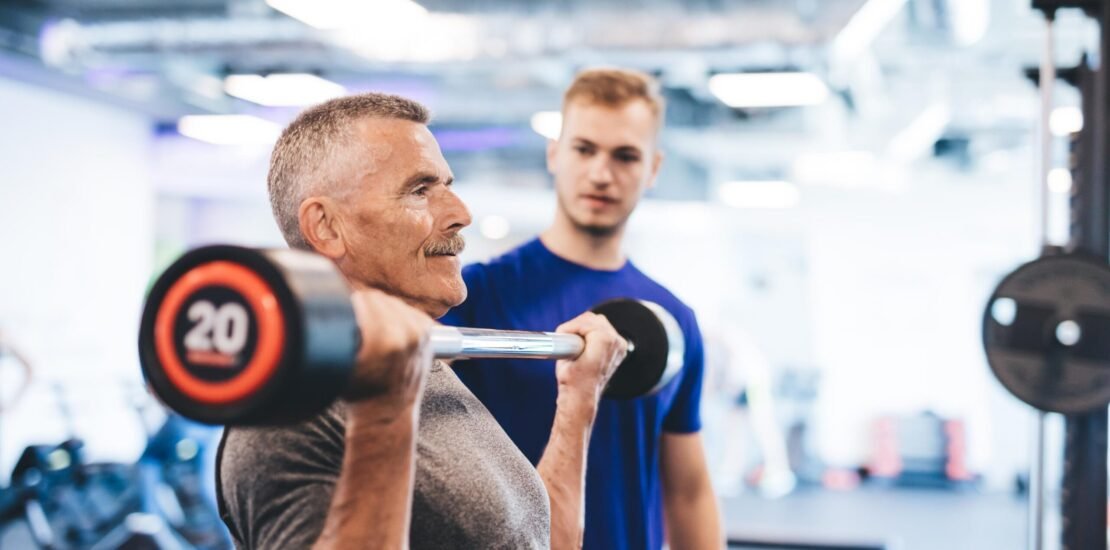
The short answer is yes. Adults over 50 can build muscle, gain strength, and improve physical function with the right approach. Progress is slower than it was in your 20s or 30s, but the body retains its ability to respond to resistance training at every age.
Muscle mass typically declines 3–5% per decade after 30, accelerating after 60 — but that trajectory isn’t locked in. Well-structured resistance training can slow or reverse part of this decline, even well past age 50. For adults over 50, “building muscle” means more than bigger biceps — it means more strength, better mobility, and the functional independence to live on your own terms.
Four pillars drive these results: resistance training, protein-focused nutrition, recovery through sleep and rest days, and consistency over months and years. If you have joint pain, a history of back issues, or a chronic condition, a personalized approach isn’t optional — it’s essential.
Key Takeaways
- Yes, you can build muscle after age 50.
- Progress should be measured by strength, balance, and mobility, not just appearance or scale weight.
- A personalized routine is safer and more effective than generic workouts, especially with past injuries or medical conditions.
- Consistency beats intensity; steady training 2–3 times per week outperforms occasional extreme efforts.
Ready to Build Strength With Science-Based Personal Training in Boca Raton?
Call The Facility for Personal Training at (561) 997-8348 to learn more about our four-year-degree trainers and trademarked DVNS
(Dynamic Variable Muscular Stimulation) training system.
What Happens to Muscle as You Age?
Sarcopenia, the gradual loss of muscle mass and strength, accelerates around age 50, with lean body mass declining roughly 0.5% a year without strength training. Several factors drive this:
- Reduced physical activity removes the stimulus muscles need to maintain size and function
- Declining testosterone, estrogen, and growth hormone slow protein synthesis and repair
- Anabolic resistance means older muscle needs a stronger training and nutritional signal to trigger growth
- Fast-twitch fibers, critical for power and quick movement, shrink faster than slow-twitch fibers
The consequences go beyond appearance — muscle loss increases fall risk, reduces bone density, and erodes the ability to climb stairs or carry groceries. But these changes aren’t destiny. Well-designed strength training significantly slows or even reverses many of these trends.
How Resistance Training Builds Muscle After 50
Resistance training- weights, bands, machines, or body weight is the primary driver of muscle growth after 50. Progressive overload is key: gradually increasing resistance, reps, or difficulty so muscles keep adapting instead of plateauing.
- Prioritize compound movements — squats, deadlifts, rows, presses — that engage multiple muscle groups at once
- Use controlled eccentric phases to recruit fast-twitch fibers, the ones most vulnerable to age-related loss
- Choose joint-friendly variations — resistance bands, supported squats, wall push-ups, machine-based lifts — to reduce joint stress
- Prioritize proper form over maximum effort; training to complete fatigue isn’t necessary to see results
Why Personalized Training Matters More After 50
A generic “over 50” workout can’t account for your history, abilities, and goals. A personalized program factors in your fitness level, past injuries, medical conditions, mobility limits, and specific goals — for example, choosing a leg press over deep barbell squats, or machine rows over heavy barbell rows for someone with back issues. This tailoring is what leads to fewer flare-ups, better adherence, and steadier progress.
Recovery: Where Muscle Growth Actually Happens
Repair and adaptation happen between workouts, not during them.
- Train 2–3 times per week, full-body sessions on non-consecutive days
- Allow 48–72 hours between intense sessions for the same muscle group
- Aim for 7–9 hours of sleep — it supports hormone balance and tissue repair
- Use light activity (walking, stretching) on off days to support blood flow
Consistently training at maximal effort often stalls progress. Steady, moderate-to-hard training with real recovery produces better results after 50 than burning out in a few weeks.
What Should You Eat to Support Muscle Building After 50?
Anabolic resistance makes protein synthesis less efficient with age, so protein needs go up. Most active adults over 50 do well aiming for roughly 1.2–1.6 g of protein per kilogram of body weight daily, spread across meals at around 25–30 g per sitting to support muscle protein synthesis throughout the day.
Good sources include lean meats, fish, eggs, Greek yogurt, beans, lentils, and tofu, alongside colorful fruits, vegetables, and whole grains. Some people also explore creatine or fish oil. Food should complement resistance training, not replace it — and anyone with kidney disease, diabetes, or another medical concern should get personalized targets from a registered dietitian or physician.
What Are the Common Myths About Building Muscle After 50?
- “Muscle loss is just part of aging.”
Aging plays a role, but inactivity drives much of the decline — and resistance training can slow or reverse a meaningful part of it.
- “You have to train extremely hard.”
Effective training depends on stimulus, progression, and recovery — not constant exhaustion. Controlled effort with proper form delivers real results.
- “It’s too late to start.”
Studies in adults in their 70s and 80s still show measurable muscle and functional gains from resistance training.
- “Strength training is too risky for older adults.”
Properly supervised training with correct technique typically reduces injury risk, supports bone density, and improves balance and coordination.
How Does The Facility for Personal Training Use Science-Based Training to Support Adults Over 40?
The Facility for Personal Training in Boca Raton focuses on adults 40 and older, including those over 50 seeking healthy aging and functional strength. All trainers hold four-year degrees in Exercise Science, Physiology, or Kinesiology, and the trademarked DVNS (Dynamic Variable Muscular Stimulation) system uses tailored resistance patterns — developed by doctors — to safely challenge muscles through different angles and loads.
Programming addresses real-world issues: joint pain, prior surgeries, bone loss, and deconditioning after long sedentary periods, in a private, supportive setting focused on measurable progress.
How Can Building Muscle Improve Functional Fitness and Long-Term Independence?
Stronger muscles are a means to an end. Better strength supports spinal health, reduces chronic low back pain risk, and improves balance for golf, tennis, or pickleball. Functional strength means carrying laundry, gardening, traveling with luggage, or keeping up with grandkids without fear of injury — and it supports bone density, cardiovascular health, and cognitive health along the way. At The Facility, building muscle is always connected to one larger goal: helping adults stay active and independent for as long as possible.
What a Personalized Program Can Look Like
Initial assessment: posture, mobility, balance, core strength, and a full discussion of health history and goals
Program design: safe starting exercises — supported squats, machine rows, light dumbbell presses — at an appropriate frequency
Progression: resistance, reps, tempo, and complexity increase gradually as the body adapts
Ongoing adjustments: the plan flexes around travel, aches, or medical updates so it stays sustainable
Ready to Build Strength After 50?
If you’re in Boca Raton, Delray Beach, Boynton Beach, or the surrounding South Florida communities, The Facility for Personal Training specializes in adults 40 and older — including those brand new to lifting, returning after a long break, or managing physical and medical concerns.
Call The Facility for Personal Training at (561) 997-8348 to learn how personalized training using Dynamic Variable Muscular Stimulation (DVNS) can help you build strength, confidence, and a body that works for you after 50.
Frequently Asked Questions
How many days per week should I lift weights after 50?
Most adults over 50 benefit from 2–3 nonconsecutive days of resistance training a week, with at least one rest or light-activity day between sessions. Let recovery and workout quality guide your schedule more than hitting a specific number, and avoid training the same muscle group on back-to-back days.
Can I build muscle with just body weight and resistance bands?
Yes — push-ups, supported squats, and banded rows provide real stimulus when done with progressive overload, especially for beginners or those returning after time off. Free weights and machines offer more loading options later, but bands and body weight alone can maintain strong results.
I have arthritis or joint pain — is strength training still safe?
Often, yes — properly designed training can reduce joint pain by strengthening the muscles that support the joint. Get medical clearance and work with a trainer who can modify exercises and ranges of motion to avoid flare-ups.
How long before I notice muscle gain after 50?
Most people feel stronger and more stable within 4–6 weeks of consistent training, with visible changes in tone and posture often appearing over 8–12 weeks. Long-term gains in function and bone health build over months and years of steady training, recovery, and adequate protein.
Do I need supplements to build muscle after 50?
Not necessarily — many adults build muscle effectively through whole foods alone. Some people use protein powder to hit daily targets, and creatine has solid research behind it for maintaining muscle and performance, but check with a healthcare professional before adding anything new, especially if you take medications.