


Diabetes and prediabetes remain a significant and growing concern across the United States. Current estimates show that approximately 12% of U.S. adults have diabetes, including both diagnosed and undiagnosed cases, while nearly 2 in 5 adults have prediabetes, with the burden especially high among those aged 45–64, where roughly 44% are affected. These numbers are particularly relevant for adults over 40, many of whom are looking for effective ways to manage their health. Managing these conditions requires more than diet and medication; it demands a strategic approach that addresses underlying metabolic changes.
While walking and other cardiovascular activities are important, they often fall short in counteracting muscle loss and insulin resistance, which naturally increase with age and diabetes. Maintaining and building lean muscle is essential because muscle tissue plays a critical role in regulating glucose and supporting overall metabolic health.
Strength training offers a powerful solution. By engaging muscles through resistance exercises, individuals can improve insulin sensitivity, enhance glucose control, and maintain functional strength for daily life. Whether you are newly diagnosed, managing prediabetes, or simply aiming to preserve health and independence, incorporating a safe and structured strength training program can be transformative. This article will explore the science behind resistance training and guide how to integrate it effectively into a diabetes management plan.
At The Facility for Personal Training in Boca Raton, FL, we design individualized strength training programs that help improve insulin sensitivity, build lean muscle, and support long-term metabolic health. Our team works closely with each client to ensure exercises are safe, effective, and tailored to your unique needs.
Don’t wait to prioritize your strength, energy, and independence. Contact us today at 561-997-8348 to schedule a consultation and discover how targeted resistance training can become a cornerstone of your diabetes management plan.
👉Also Read: Want Better Weight Training Results? Avoid These Mistakes (Boca Raton Trainer Approved)
Understanding Diabetes and Its Impact After 40
Type 2 diabetes and prediabetes disrupt the body’s ability to regulate blood sugar effectively. Insulin sensitivity drops, glucose uptake by muscle cells decreases, and over time, the pancreas struggles to keep up with demand. This creates a cycle that becomes harder to manage with each passing year.
For adults over 40, diabetes brings a set of interconnected challenges:
- Gradual muscle loss that accelerates each decade
- Stubborn visceral belly fat that worsens insulin resistance
- Chronic fatigue that makes exercise feel overwhelming
- Slower recovery from physical activity
- Decreased functional strength affecting daily tasks
Here’s the key insight: muscle tissue functions like a sponge for glucose. After a meal, skeletal muscle is where most blood sugar gets absorbed under insulin’s direction. More muscle mass means greater capacity to buffer blood sugar fluctuations throughout the day.
Without resistance training, adults can lose roughly 3–8% of their muscle mass per decade after age 40. Strength losses are even steeper, especially after 50. This decline directly worsens insulin resistance, creating a cycle where less muscle leads to higher blood sugar, which leads to more complications.
The long-term consequences extend beyond glucose control. Reduced muscle mass increases the risk of cardiovascular disease, decreases mobility, and significantly raises the likelihood of falls and fractures in later years. Sarcopenia, the medical term for age-related muscle loss, is now recognized as a medical condition in its own right, affecting over 20% of people aged 60–70 and nearly 50% of those over 75.
👉Also Read: Back Pain, Joint Issues, and Low Energy? Here’s How a Boca Raton Personal Trainer Can Help
Why Strength Training Matters So Much for Diabetes Management
Research over the past 10–15 years has consistently demonstrated that strength training can be as effective as or more effective than cardio alone for improving glycemic control. A 2025 meta-analysis comparing nine different exercise interventions found that resistance training and combination training improved fasting blood glucose, insulin levels, and HOMA-IR (a measure of insulin resistance) more than many aerobic-only approaches.
The mechanism is straightforward: strength training improves insulin sensitivity through multiple pathways. When you build muscle through resistance exercise, you increase the total capacity for glucose uptake. Additionally, resistance training upregulates insulin signaling pathways and glucose transporter proteins (like GLUT4) within existing muscle cells, making them more responsive to insulin.
Resistance workouts can lower blood glucose levels for up to 24 hours after a session and reduce insulin levels for up to 18 hours post-exercise. This sustained improvement complements daily medications and dietary efforts, providing another layer of metabolic support.
The benefits extend well beyond glucose management:
| Benefit Category | What Strength Training Delivers |
|---|---|
| Cardiovascular | Lower blood pressure, improved cholesterol profile |
| Body Composition | Increased lean mass, reduced visceral fat |
| Metabolic | Enhanced insulin sensitivity, better glucose disposal |
| Functional | Preserved independence, reduced fall risk |
| Bone Health | Maintained bone density, reduced fracture risk |
Most critically for adults over 40, strength training directly combats sarcopenia. Whether you want to keep playing 18 holes, dominate your pickleball games, travel comfortably, or simply carry groceries without assistance, maintaining muscle through resistance exercise is non-negotiable.
👉Also Read: What Are the Health Benefits of Circuit Training Programs for Seniors in Boca Raton?
Safe and Effective Strength Training Strategies for Adults With Diabetes
Safety must come first. Adults with diabetes often have additional considerations, such as peripheral neuropathy, retinopathy, cardiovascular concerns, or joint issues, that require careful program design. Jumping into random high-intensity workouts without proper guidance creates unnecessary risk.
The evidence-based recommendation from the American Diabetes Association (ADA) and American College of Sports Medicine (ACSM) is clear: 2–3 strength training sessions per week on non-consecutive days, covering all major muscle groups, including legs, hips, back, chest, shoulders, and core.
Working with a certified personal trainer who understands diabetes management makes a significant difference. The right professional can monitor for signs of blood sugar fluctuations, select appropriate exercises for individual limitations, and adjust intensity based on medical status and current fitness level.
At The Facility for Personal Training in Boca Raton, trainers utilize a method called Dynamic Variable Muscular Stimulation (DVNS), a trademarked methodology developed by doctors to safely maximize muscle activation without overloading vulnerable joints. This approach combines controlled resistance with neuromuscular stimulation and AI-guided assessments to create programs tailored to each client’s medical history and goals.
Personalized programs should account for:
- Neuropathy in feet (may require seated or machine-based exercises)
- Blood pressure considerations
- Cardiovascular history
- Medication timing (especially insulin or sulfonylureas) to prevent hypoglycemia during sessions
- Joint limitations and past injuries
For those taking insulin or certain oral medications, the timing of workouts relative to meals and medication doses requires coordination with healthcare providers to reduce the risk of low blood sugar during or after exercise.
Functional Fitness: How Strength Training Helps You Live Better in Boca Raton
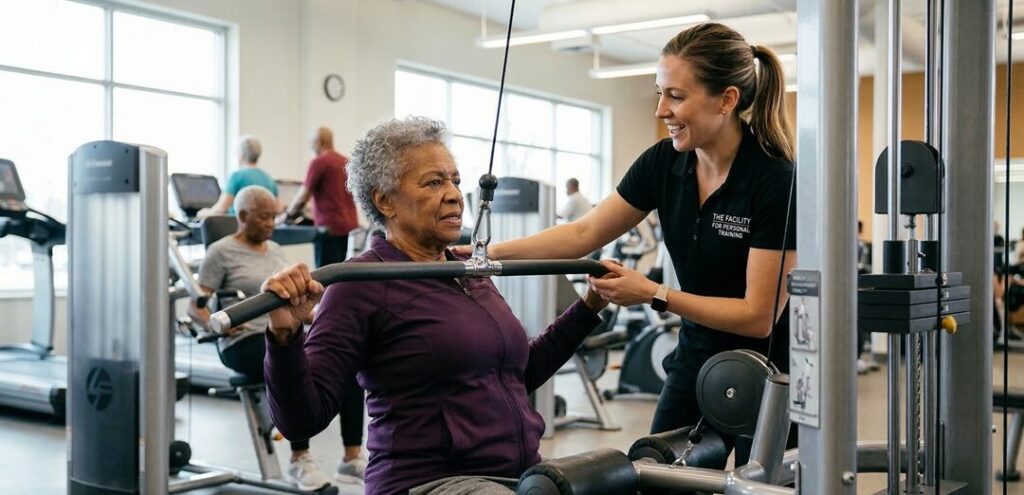 Functional fitness means training that makes everyday life easier and safer, not just numbers on a scale or a certain appearance. For Boca Raton residents, this translates directly to the activities that matter.
Concrete examples of functional benefits:
- Stronger legs and core for walking without fatigue, climbing condo stairs, or completing 18 holes at Boca Lago without back pain
- Improved balance for navigating wet pool decks, uneven sidewalks, and curbs without fear of falling
- Better posture and back strength that eases long drives on I-95 or US-441, or extended periods sitting at home offices
- Enhanced endurance for playing pickleball, tennis, or keeping up with grandchildren at the beach
- Grip strength and upper body power for carrying groceries from Town Center Mall, lifting luggage for trips, or gardening
For adults with neuropathy, improved lower body strength and proprioception (body awareness) become even more critical. Strong muscles compensate for reduced sensation, significantly reducing fall risk in environments that would otherwise be hazardous.
Consistent strength training preserves independence across ages. The ability to get up from a low chair, climb stairs without a railing, or walk several blocks without rest, these functional capabilities determine quality of life far more than any single health metric.
Overcoming Barriers and Staying Motivated
Common barriers prevent many Boca Raton adults with diabetes from starting a strength training program:
- Fear of injury when unsure of proper technique
- Uncertainty about what exercises are safe with their condition
- Busy schedules that make gym visits feel impossible
- Discouragement from past fitness attempts that didn’t work
- Intimidation from crowded commercial gyms filled with younger members
These concerns are valid, and addressable.
Addressing fear of injury: A structured, supervised program with gradual progression makes strength training safe even for complete beginners and seniors. Starting with bodyweight movements, resistance bands, and light dumbbells allows the body to adapt before progressing to heavier weights or more complex exercises. Professional trainers know how to push toward real results while maintaining safety.
Practical motivation strategies:
- Set specific health goals tied to measurable outcomes (lowering A1C by a target date, being fit for a planned vacation)
- Track progress through body composition measurements, strength numbers, and energy levels
- Celebrate small wins, better sleep, increased endurance, and reduced medication doses
- Connect workouts to activities you love (being able to play with grandchildren, enjoying travel without exhaustion)
A dedicated trainer who understands diabetes can communicate with healthcare providers when needed, adjusting training plans around lab results, medication changes, or periods of illness. This creates a forward-moving feedback loop where exercise and medical care reinforce each other.
Getting Started With Strength Training for Diabetes in Boca Raton
It’s never too late to start, whether you’re newly diagnosed or have been managing diabetes for years. The transformative power of resistance training applies regardless of starting point.
Step 1: Find the Right Personal Training Facility
Contact a gym or personal training facility in Boca Raton that specializes in strength training for seniors over 70 and has expertise in working with medical conditions. Look for trainers with degrees in Exercise Science, Physiology, or Kinesiology, not just weekend certifications. The Facility for Personal Training is one local option recognized for its state-of-the-art approach to medical fitness and technology-guided programming.
Step 2: Schedule a Consultation
Your first visit should include a thorough health history review covering:
- Current medications and dosages
- Recent A1C trends and lab results
- Comorbidities (heart disease, neuropathy, joint issues)
- Previous injuries and surgeries
- Current activity level and fitness journey goals
Step 3: Complete Movement and Strength Assessment
A qualified trainer will assess range of motion, strength imbalances, posture, gait, and functional abilities (walking speed, sit-to-stand capability). Body composition measurements using equipment like InBody devices establish a baseline for tracking progress.
Step 4: Receive Your Customized Program
Based on assessment findings, you’ll receive a personalized program specifying:
- Training frequency (typically 2–3 sessions per week)
- Exercise selection appropriate for your limitations
- Use of tools like DVNS for controlled resistance
- Coordination with walking or other cardio activities
- Nutrition considerations to support your goals
Step 5: Book Your First Session
Take action this week. Reserve your consultation or trial Boca Raton cardio and strength classes at a personal training facility focused on evidence-based programs. Many facilities offer initial assessments that help you explore whether their approach matches your needs before making a longer commitment.
If you are searching for strength training near me in Boca Raton, FL, look no further than The Facility for Personal Training, where our medically informed programs help you build strength safely, improve mobility, and maintain independence at every stage of life.
👉Also Read: What Makes Senior Personal Training in Boca Raton Different from Regular Workouts?
Take Charge of Your Health with a Personal Trainer in Boca Raton
Don’t leave your fitness and your health to chance. At The Facility for Personal Training in Boca Raton, our team is dedicated to creating safe, effective, and personalized programs for adults managing chronic conditions. Contact us today to schedule a consultation and discover how our medically informed approach can help you stay strong, mobile, and independent. Your journey to confident, healthier living starts here.
Frequently Asked Questions
How many days per week should I strength train if I have type 2 diabetes?
Most adults with type 2 diabetes achieve excellent results with 2–3 strength training sessions per week on non-consecutive days. Each session can be 30–45 minutes, focusing on full-body movements rather than long, exhausting workouts that create unnecessary fatigue.
Beginners should start with lower volume and intensity, gradually building as technique improves and the body adapts. This manageable approach allows for sustainable progress while minimizing the risk of injury or blood sugar crashes. Working with a professional helps determine the right starting point for your current fitness level.
Is strength training safe if I have diabetic neuropathy in my feet?
Strength training can be safe and highly beneficial even with neuropathy, but exercise selection and professional supervision become especially important. Options like seated exercises, machine-based movements, and controlled balance work reduce fall risk and minimize pressure on sensitive feet.
Personal trainers from the best gyms in Boca Raton are experienced with neuropathy and may recommend avoiding heavily loaded standing exercises initially, instead using free weights and equipment in supported positions. Have your feet checked regularly by your healthcare provider, and always inform trainers about any numbness, pain, or ulcers so programs can be modified appropriately.
Can I replace walking with strength training, or should I do both?
The best diabetes management plans typically include both aerobic activity and strength training; they serve different but complementary purposes. Walking and cardio are amazing for heart health and immediate blood sugar lowering, while strength training builds the muscle that improves long-term insulin sensitivity and prevents sarcopenia.
A simple weekly structure might include walking most days of the week (even short walks count) combined with 2–3 dedicated strength sessions. Both forms of exercise push your metabolism in positive directions, and together they create synergistic benefits greater than either alone.