

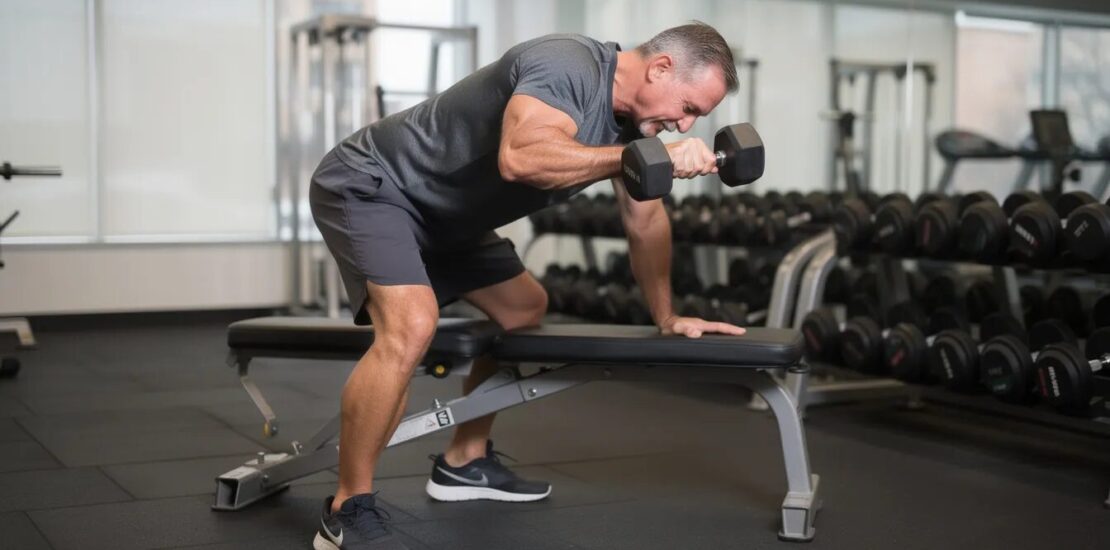
You’ve been consistent. Four days a week at the gym for six months. You’ve added weight to the machines, pushed through your sets, and shown up even when you didn’t feel like it.
But your body looks the same. Your energy is flat. And your lower back aches every morning.
If you’re over 40 in Boca Raton, juggling a demanding career, managing a household, and trying to stay healthy, this scenario hits different. You don’t have time to waste on training that doesn’t work. Yet many of the people you see in gyms across South Florida are making the same three critical mistakes that guarantee slow (or zero) progress, chronic joint pain, and eventual frustration.
The Problem Isn’t Your Effort. It’s Your Strategy.
After 40, your body changes. Recovery doesn’t happen overnight. Joints are less forgiving. Hormones shift. This means the “grind it out” approach that works for 25-year-olds actually works against you. Poor technique, inadequate warm-ups, and random exercise selection don’t just waste time; they actively damage your potential for results and accelerate wear on your knees, shoulders, and spine.
Research shows that full range of motion resistance training produces greater hypertrophy benefits than partial ROM, particularly for lower body muscles. Additionally, controlled movement tempo, especially during the eccentric (lowering) phase, increases muscle activation and time under tension, both key drivers of muscle growth. For adults over 40, these factors become especially important since joint health and recovery capacity require more intentional, controlled training approaches.
The Fix Isn’t More Training. It’s Smarter Training.
At The Facility for Personal Training, our Boca Raton, FL fitness professionals have identified a consistent pattern. During initial assessments, we identify the specific form, recovery, and programming errors that quietly sabotage progress.
The good news? These mistakes are fixable. Once corrected, training becomes more intentional, sustainable, and aligned with your actual goals, whether that’s building strength, reducing joint pain, or simply feeling better in your body.
In this guide, we’ll walk through the common mistakes sabotaging your progress and exactly how to fix them.
👉Also Read: What Are the Health Benefits of Circuit Training Programs for Seniors in Boca Raton?
Common Weight Training Errors That Limit Progress
Many adults make subtle mistakes during weight training that quietly hold back progress, increase the risk of injury, and slow results. Some of the common mistakes are as follows:
| Common Mistake | Why It Limits Progress |
|---|---|
| Skipping warm-ups | Reduces blood flow and muscle activation; increases injury risk |
| Using momentum instead of control | Shifts load to joints; reduces muscle engagement |
| Choosing random exercises | No systematic strength building in major muscle groups |
| Never changing weights or reps | Body adapts; no stimulus for progress |
| Partial range of motion | Engages fewer muscle fibers; limits strength and mobility gains |
| Ignoring pain signals | Small issues become chronic injuries |
Real Examples
Fast half-rep squats with too much weight bypass the hardest part of the lift, where real muscle work happens. Bouncing biceps curls and shoulder presses shift the load away from the muscles. Neither builds the strength you’re after.
The Root Problem
These mistakes stem from wanting faster results. More weight and more speed seem like progress. They’re not. They reduce muscle stimulation, increase injury risk, and create plateaus.
The Fix
A qualified trainer spots these patterns in your first assessment and replaces them with techniques tailored to your age, joints, and goals.
👉Also Read: The Science of Slowing Aging: How Resistance and Balance Training Keep You Younger and Healthier
How Poor Technique Increases Risk of Injury
Technique matters more after 40 for straightforward biological reasons. Cartilage thins, previous injuries leave residual limitations, and tissues heal more slowly. What a 25-year-old might get away with can sideline someone in their 50s for weeks.
The most dangerous technique errors include:
- Rounding the lower back during deadlifts or rows – This compresses lumbar discs with shear forces reaching 3–5 times your body weight, potentially causing herniations
- Letting knees cave inward during squats or lunges – Stresses the medial knee structures and can aggravate arthritis
- Jerking weights overhead – Creates micro-tears in shoulder tendons and destabilizes the rotator cuff
- Locking out joints under heavy load – Shifts stress from muscles to bones and ligaments
These errors aggravate the issues many Boca Raton clients already manage: lumbar disc problems, rotator cuff irritation, knee arthritis, and plantar fasciitis. Physical therapists estimate that poor form accounts for roughly 70% of gym injuries.
Even “light” weights cause cumulative damage when performed with poor alignment. A 15-pound dumbbell shoulder press done with bad mechanics thousands of times over the years creates wear-and-tear that eventually demands attention.
At The Facility for Personal Training, trainers use the DVNS Science™ assessment to analyze movement patterns and correct form in real time. The goal is to strengthen joints instead of stressing them, building the support structures that allow you to stay strong for decades.
👉Also Read: What Makes Senior Personal Training in Boca Raton Different from Regular Workouts?
Why Even Experienced Lifters Can Fall Into These Traps
 Years of lifting create automatic movement patterns. The problem: if those patterns include partial reps, ego loading, or muscular imbalances, they lock in and repeat every session, often painlessly at first, then with consequences later.
Your body changes after 40. Desk work tightens hip flexors, stress alters posture, and declining sleep can affect recovery. Muscle loss and reduced bone density make proper lifting technique more important than ever, as the approach that worked at 35 may no longer suit your 55-year-old body.
Experienced lifters often dismiss discomfort as normal wear-and-tear, never realizing it signals mobility limitations or imbalances that worsen over time. At The Facility for Personal Training, we regularly retrain lifters in their 40s, 50s, and 60s, unlocking better results through small, precise movement adjustments.
Essential Foundations for Effective Weight Training
Four elements determine whether your training produces results or creates problems: warm-up, form, progression, and recovery.
Skip anyone, and progress stalls or injury follows. Get all four right, and you train consistently without the injury cycles that interrupt most gym-goers’ progress.
At The Facility for Personal Training, every program, from new lifters to older adults with medical conditions, starts here.
The Importance of Proper Warm-Ups to Prepare Your Body
A proper warm-up is non-negotiable after age 40. Warm-up prepares joints for movement, activating the synovial fluid that lubricates joint surfaces and nourishes cartilage, decreasing friction within joints. It also raises muscle temperature, activates stabilizer muscles, and improves power output.
A practical warm-up sequence includes:
- 5 minutes of light cardio – Treadmill walking, recumbent cycling, or elliptical at a conversational pace
- Dynamic stretches – Leg swings (forward and lateral), arm circles, hip circles
- Movement preparation – Bodyweight squats, glute bridges, band pull-aparts
- Lift-specific priming – Light hip hinges before deadlifts, empty barbell presses before shoulder work
Dynamic vs. Static Stretching
Research recommends avoiding prolonged static stretching before strength- and power-related tasks and favoring dynamic stretching exercises instead. Save static stretching for cool-down or separate mobility sessions.
Customized Warm-Ups at The Facility for Personal Training
Warm-ups aren’t one-size-fits-all. Someone with shoulder arthritis needs a different preparation than someone recovering from knee surgery. At The Facility for Personal Training, trainers customize warm-ups based on your joint history and guide you one-on-one, so you understand what to do and why.
Correct Exercise Form and Technique for Maximum Results
Controlled reps with moderate weight stimulate more muscle growth and build more functional strength than heavy, uncontrolled reps. This becomes critical after 40, when joints are less forgiving, and recovery is slower.
Key Technique Principles:
| Principle | Application |
|---|---|
| Neutral spine | Maintain natural curves during all lifts; avoid rounding or excessive arching |
| Controlled movement | Move deliberately through each phase; slow eccentric (lowering) builds more muscle than fast |
| Full range of motion | Move through the complete safe arc; partial reps miss 20–30% of muscle fibers |
| Stable joints | No wobbling knees, collapsing shoulder blades, or drifting elbows, reduces joint stress and injury risk |
Foundation Lifts & Cues:
- Squats: “Sit back” into hips, keep chest proud, feet shoulder-width apart, knees tracking over toes
- Deadlifts: “Hinge at hips,” maintain flat back, push floor away with legs
- Shoulder presses: Elbows slightly in front of the bar, avoid excessive back arch
- Rows: Squeeze shoulder blades together, keep torso stable
Master these five movements: squats, hip hinges, rows, presses, and carries. They train the entire body and all major muscle groups effectively.
Our trainers use real-time feedback, mirrors, and our proprietary DVNS (Dynamic Variable Muscular Stimulation) system, a methodology developed by doctors to optimize muscle stimulation while ensuring safety to refine your form so each rep targets muscles, not joints.
Progressive Overload: How to Challenge Your Muscles Safely
Progressive overload means gradually increasing demand on muscles through weight, reps, sets, or exercise complexity. Without it, the body adapts and plateaus, limiting gains in strength and muscle mass.
A practical progression example:
A client starting with 10-pound dumbbells for chest press increases to 12.5–15 pounds over 4–6 weeks, maintaining proper form throughout. The muscles adapt to each challenge and build strength to meet the next one.
Safe progression strategies for adults over 40
- Add 2.5–5% load when the current weight feels manageable for all target reps
- Increase reps by 1–2 before adding weight
- Improve range of motion or movement control before progressing the load
- Extend the lowering phase to 3–4 seconds to increase time under tension
Why gradual progression matters
Tendons adapt at a much slower rate than muscles due to lower tissue turnover and vascularization. Muscle strength gains occur within the first 1–2 months, but tendon stiffness doesn’t change significantly until month 2–3 of training. This mismatch creates vulnerability.
Adding 15% weight in one jump, especially if coming from light resistance, can strain shoulders, knees, and the lower back before tendons have time to adapt. This can set progress back by weeks or months.
Our trainers monitor load progressions carefully, adjusting based on your recovery, joint response, and individual adaptation rate. Rather than following generic progressions, we track your specific recovery patterns to know exactly when you’re ready to progress and when to maintain.
👉Also Read: Revolutionizing Personal Training: How AI and DVNS Science™ Are Transforming Fitness for Adults Over 40
Adequate Recovery and Its Role in Growth and Performance
In your 40s, 50s, and beyond, results depend as much on what happens between workouts as what happens in the gym. Muscle protein synthesis peaks at 24 hours after training and returns to baseline by approximately 36 hours. This means training frequency matters more than long rest periods.
Realistic training frequency for adults over 40:
- 3–4 strength sessions per week, targeting different muscle groups produces better results than longer rest periods
- One full rest day per week or active recovery (walking, swimming, yoga) supports overall adaptation without taxing muscles
- Adequate sleep (7–9 hours) supports hormone balance, tissue repair, and recovery
Recovery essentials:
- Sleep supports hormone balance and tissue repair
- Stay hydrated, Florida heat increases fluid needs significantly
- Manage chronic stress, which elevates cortisol and can reduce protein synthesis and muscle growth. Short-term stress from training is normal; persistent psychological stress interferes with adaptation.
Signs of inadequate recovery include:
Declining performance on familiar exercises, persistent fatigue, irritability, poor sleep quality, and increasing joint pain. These signals mean your training volume or intensity needs adjustment.
Our personal trainers customize recovery based on your work schedule, medical history, travel, and family responsibilities. Recovery isn’t an afterthought; it’s built into your program from day one.
Eight Mistakes That Sabotage Your Progress
Skipping the warm-up
Cold muscles and joints increase injury risk. Five minutes of light cardio and dynamic movement prepares your body and improves performance.
Chasing heaviness over form
Heavy weight with poor technique shifts the load to joints and reduces muscle activation. Lighter weight with perfect form builds more strength and prevents injury.
Training the same way every week
Your body adapts quickly. Progress stalls without variation in load, reps, sets, or exercise selection. Change something every 2–4 weeks.
Not listening to pain
Sharp or persistent pain signals a problem, not toughness. Soreness is normal; pain is a warning. Stop and reassess before it becomes chronic.
Ignoring recovery
More training without adequate sleep, hydration, and rest days leads to plateaus and burnout. Recovery is when adaptation happens.
Comparing yourself to younger lifters
Your body has different needs. What works for a 30-year-old may cause injury in a 55-year-old. Train for your current body and goals.
Doing too much too soon
Jumping 15–20% in weight or volume strains tendons and joints faster than muscles adapt. Progress gradually, 2.5–5% increases per week are sustainable.
Training without a plan
Random exercises don’t build systematic strength. Master foundational movements (squats, deadlifts, rows, presses) done consistently.
At The Facility for Personal Training, we help you avoid these mistakes from day one through personalized assessment and coaching.
👉Also Read: The Best Fitness Strategies for People Over 40 Managing Medical Issues in Boca Raton
Train Smarter, Break Through Plateaus with a Boca Raton Personal Trainer
At The Facility for Personal Training in Boca Raton, our trainers assess your movement patterns, identify the specific mistakes holding you back, and build a program around your actual life, not some generic template. We’ve helped busy professionals, entrepreneurs, and executives in their 40s, 50s, and 60s break through plateaus and train smarter, not harder.
Your first assessment reveals exactly where you are and what needs to change. Schedule your assessment at The Facility for Personal Training today.
Frequently Asked Questions
Where can I find weight training for women near me in Boca Raton, FL?
Women in Boca Raton looking to improve strength, build muscle, and boost overall fitness can find personalized weight training programs at The Facility for Personal Training. Our trainers create workouts tailored to individual goals, fitness levels, and lifestyles, focusing on proper form, safe progression, and effective results. Whether you’re new to weight training or looking to take your routine to the next level, our programs are designed to help women train smarter and achieve lasting results.
What is the best menopause weight workout to maintain strength and muscle mass?
During menopause, hormonal changes can lead to muscle loss, reduced bone density, and changes in metabolism. Weight training is one of the most effective ways to counter these effects. The best workouts include a mix of moderate to heavy resistance exercises targeting all major muscle groups, combined with balance, flexibility, and core stability exercises. Controlled, progressive lifting helps maintain muscle mass, strengthen bones, and boost energy levels. Working with a Boca Raton personal trainer ensures proper form, safe progression, and a program tailored to your unique needs and fitness goals during menopause.
How many days per week should adults over 40 lift weights for the best results?
Most adults over 40 see excellent results with 2–4 sessions per week. Beginners typically start with two full-body workouts to learn proper movement and allow for recovery, while more experienced lifters can progress to three to four days using split routines that target different muscle groups.
Is it safe to start weight training if I have arthritis or past joint injuries?
Yes. When properly supervised, strength training can improve joint stability, reduce pain, and enhance physical function. Exercises, range of motion, and load must be tailored to your condition, and trainers at The Facility for Personal Training coordinate with healthcare providers when needed.
Do I need heavy weights to see meaningful strength and body composition changes?
No. Moderate weights, proper form, controlled tempo, and progressive overload are sufficient for effective training. Machines, dumbbells, bands, or bodyweight exercises can all be effective when programmed correctly, and loads are increased only when movement quality and joint comfort allow.